Rare Chinese Hardwood Armchair with Carved Longevity Panel, Qing Dynasty, 19th Century
Fine Quality Chinese Carved Hongmu Hardwood Armchair
Late Qing Dynasty, c.1875–1900
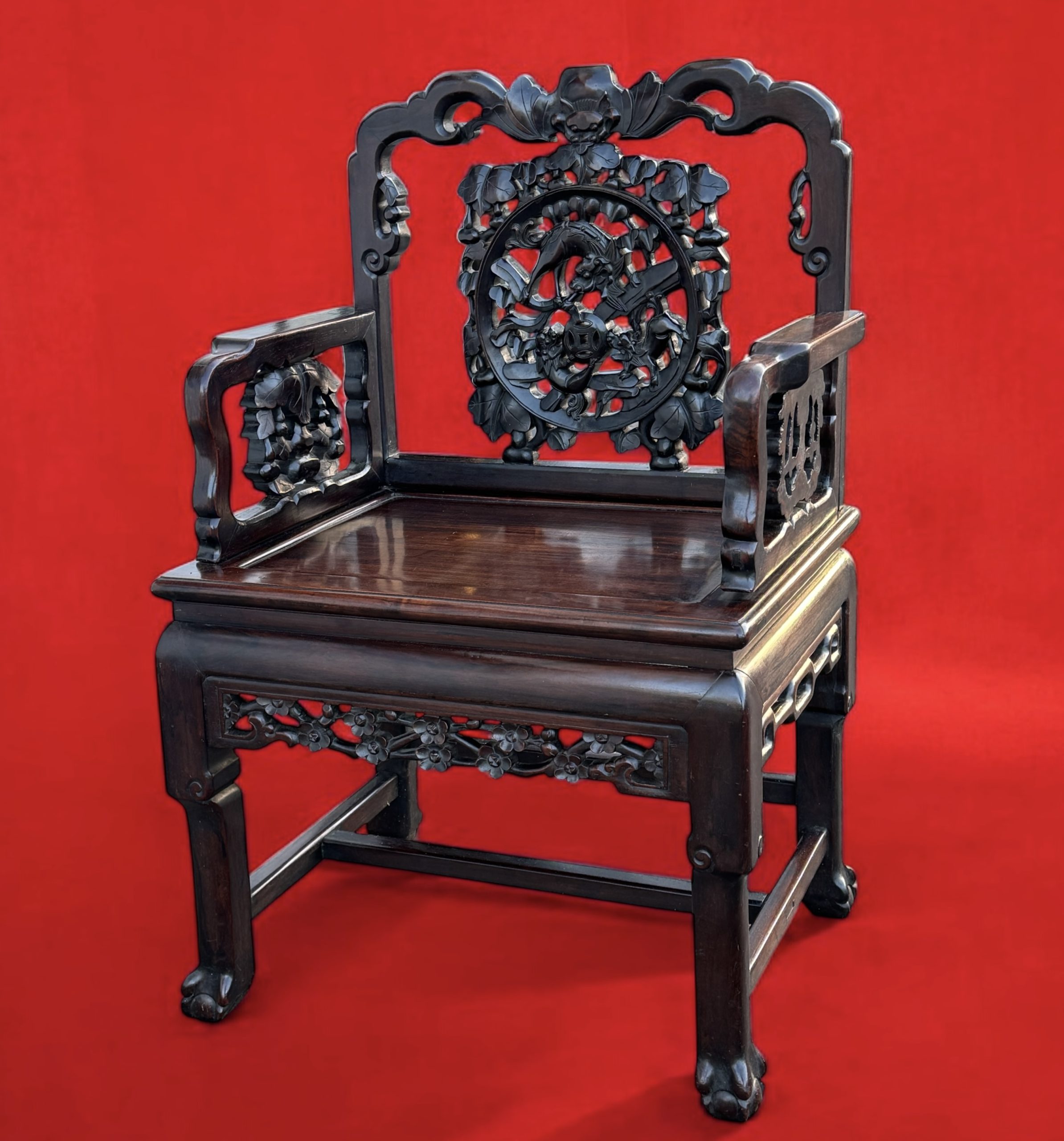
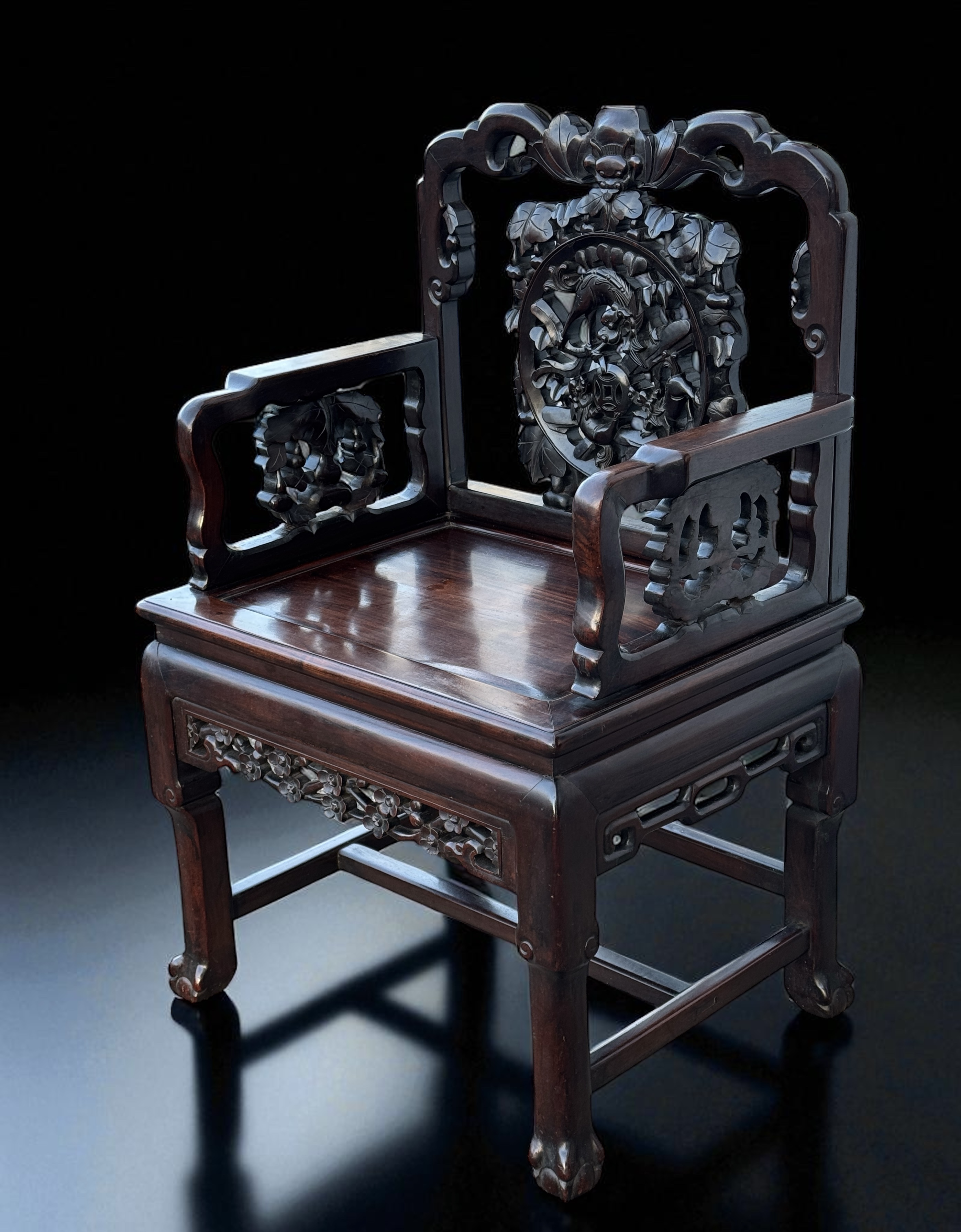
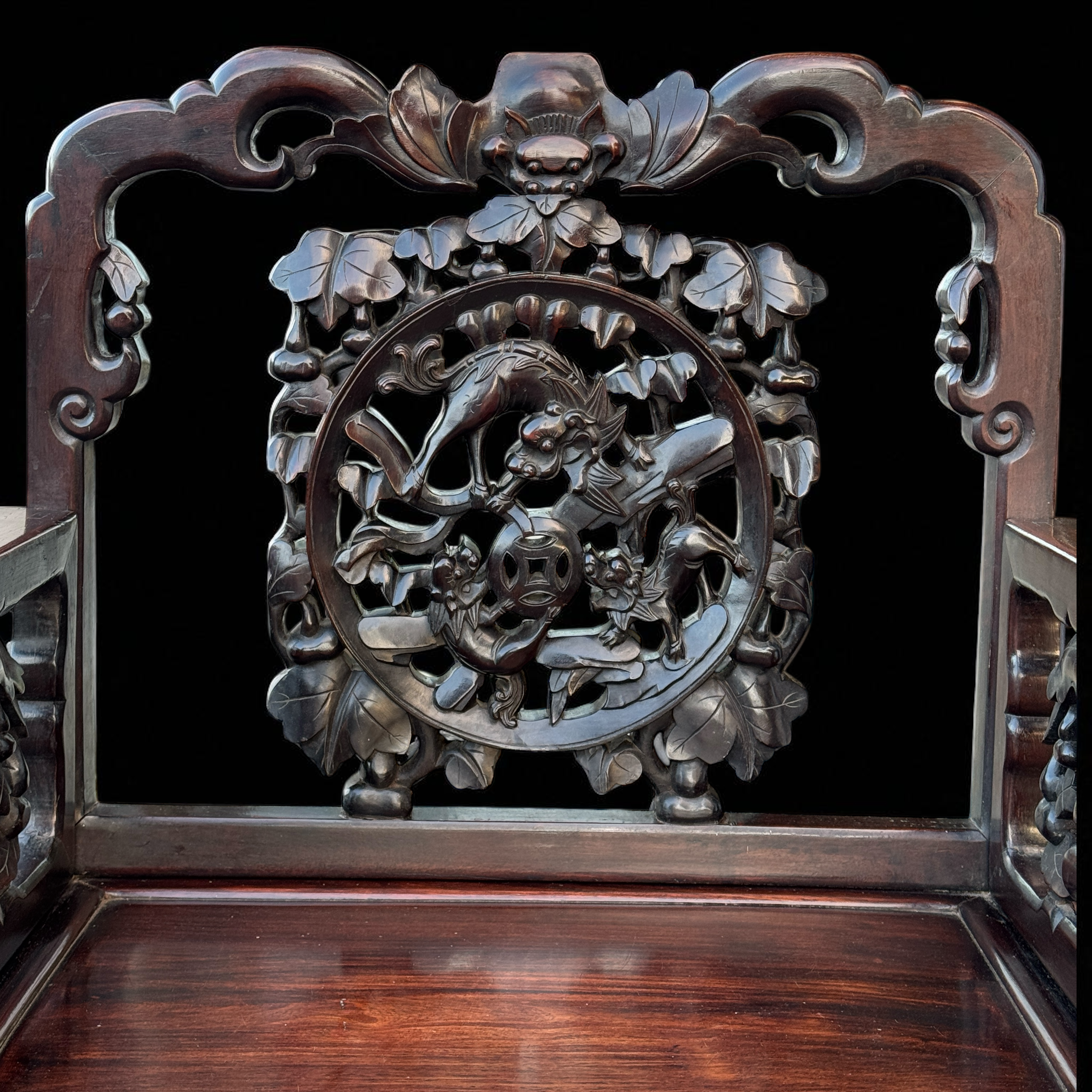
This finely crafted armchair is a masterwork of late Qing dynasty hardwood furniture, carved from dense Hongmu (红木) and rich in auspicious symbolism. The back crest rail has an exaggerated curvature with carved cloud and bat motif — symbols of good fortune. The circular medallion at the back features a Buddhist lion playing with an embroidered ball (shizi).
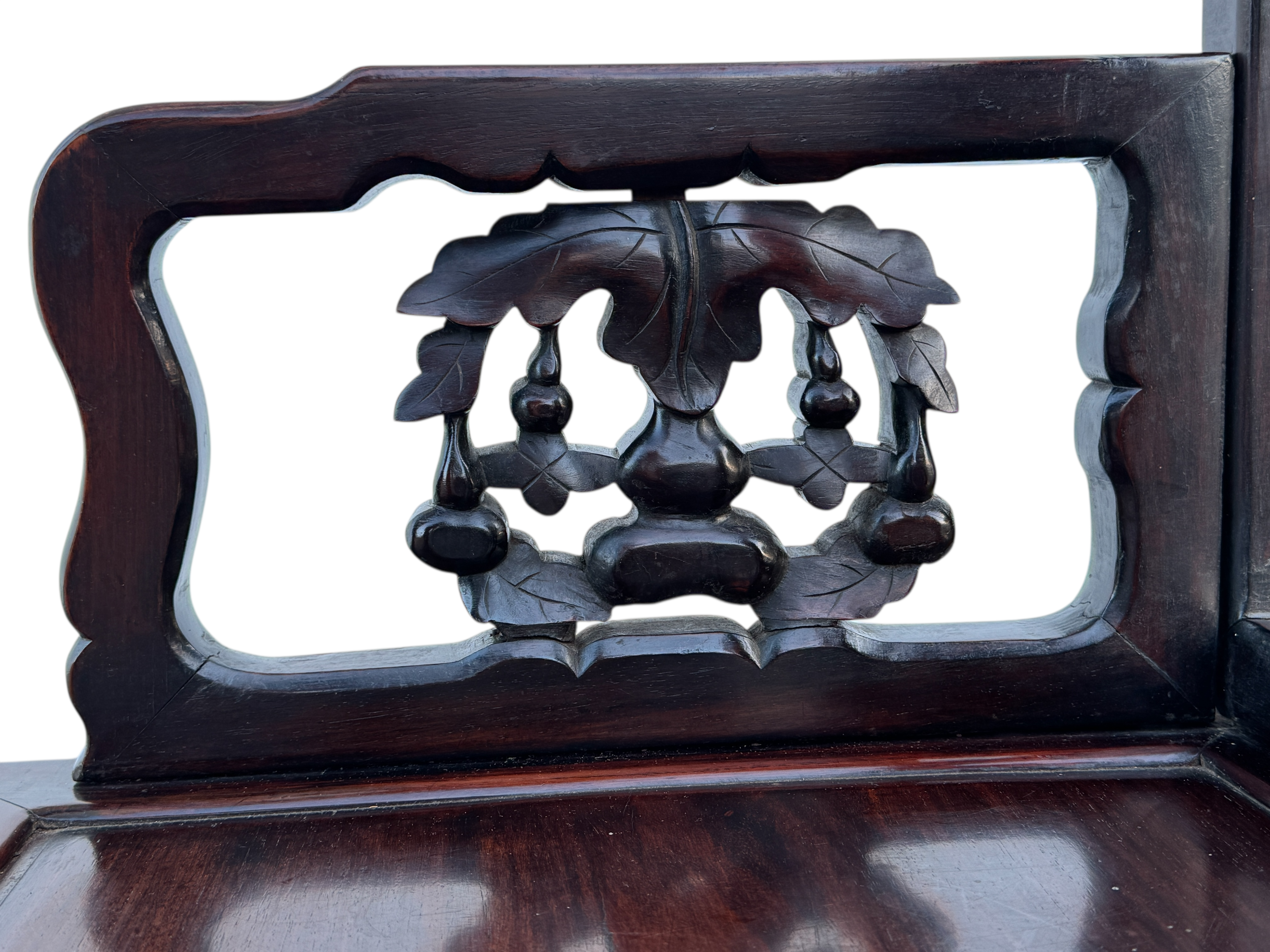
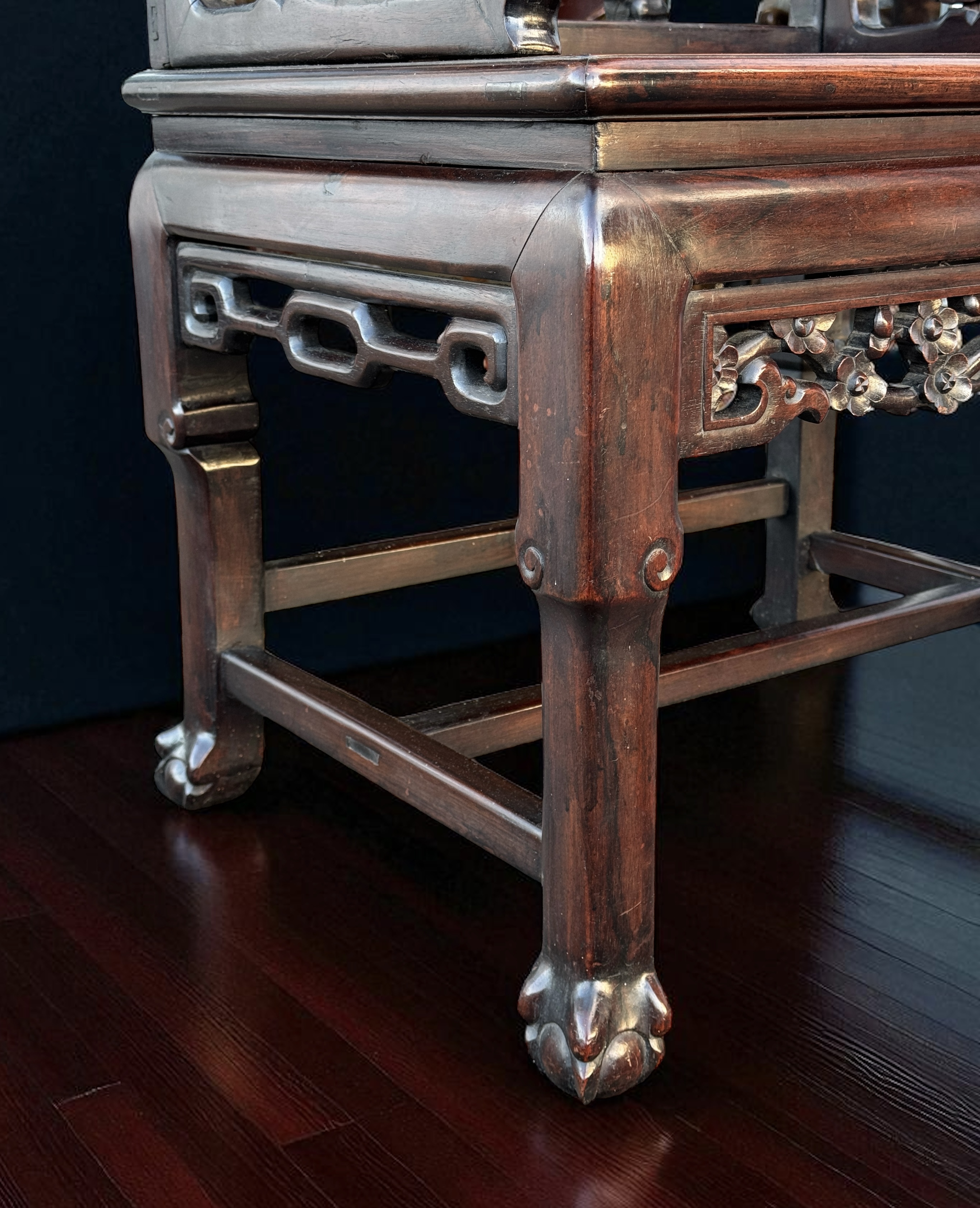
The side rails are carved with further auspicious motifs including gourd clusters (hulu), peach blossoms, and plum branches — expressing classic Chinese wishes for longevity, abundance, and perseverance. The arms are pierced with panels of gourd vine and leaf motifs, a powerful Daoist symbol of longevity and fertility, while the front and side aprons are carved with plum blossoms (meihua), emblematic of perseverance and integrity.
The overall design embodies a carefully constructed tableau of auspicious wishes: for family, fecundity, wealth, protection, and joyful continuity.
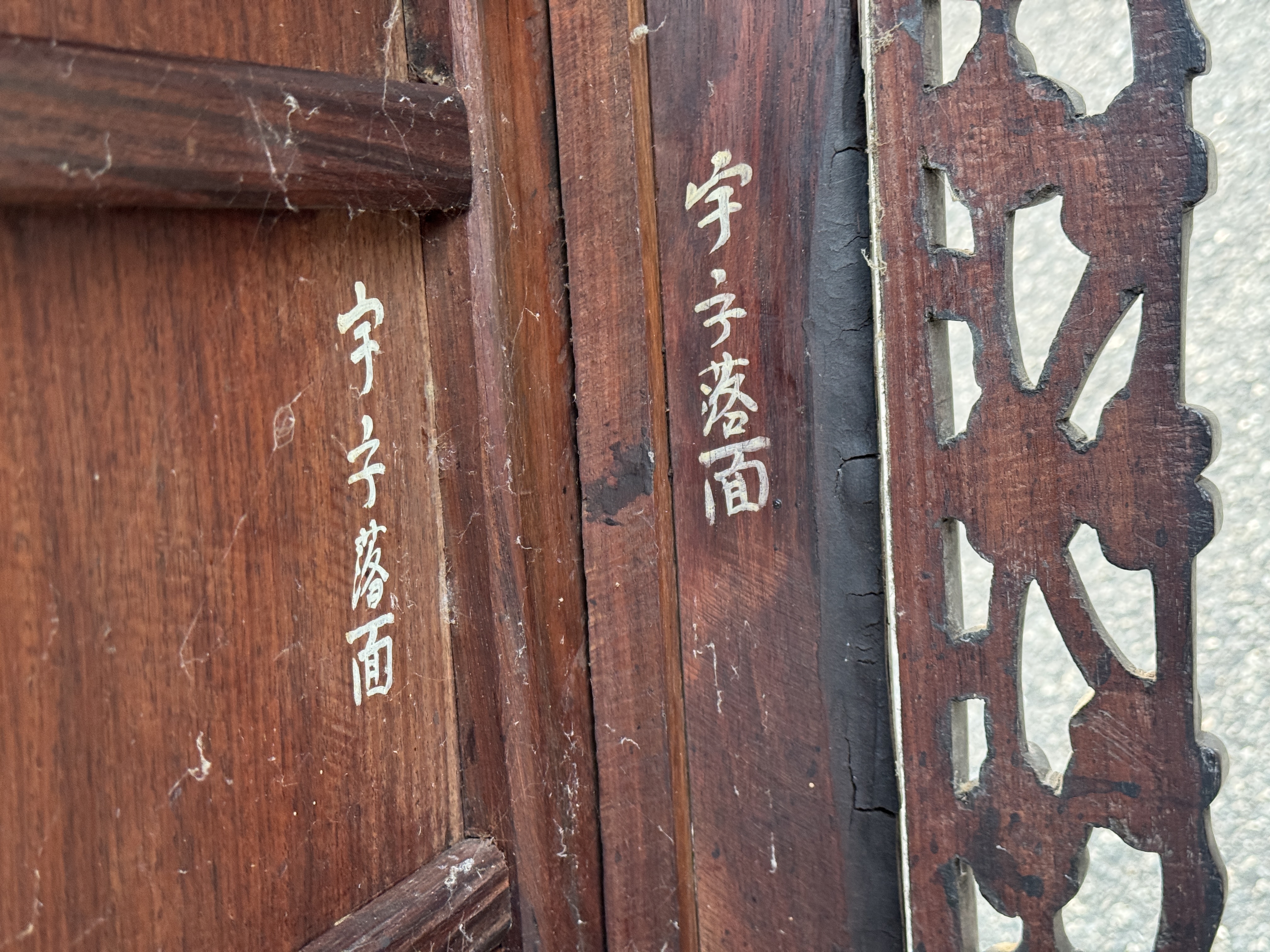
Beneath the seat, a painted inscription reads 守子藩面 — “Front face of the protected child.” This notation, likely applied during the chair’s construction or assembly, served a practical purpose in the workshop. Yet it also echoes the chair’s symbolic message: to shelter and uphold the family line.
Once likely commissioned for a wealthy southern Chinese household — perhaps as a celebratory gift — this chair would have served both as furniture and as a statement of values. The visual idiom, together with the use of hongmu and exuberant carving, is consistent with late Qing dynasty workmanship, circa 1875–1900, most likely from a southern Chinese workshop (Guangdong or Fujian region), which commonly produced ornate furniture for wealthy clients, including overseas Chinese families.