Kanxi Yen-Yen with ‘Eight Horses of Muwang’, Kanxi 1644-1722


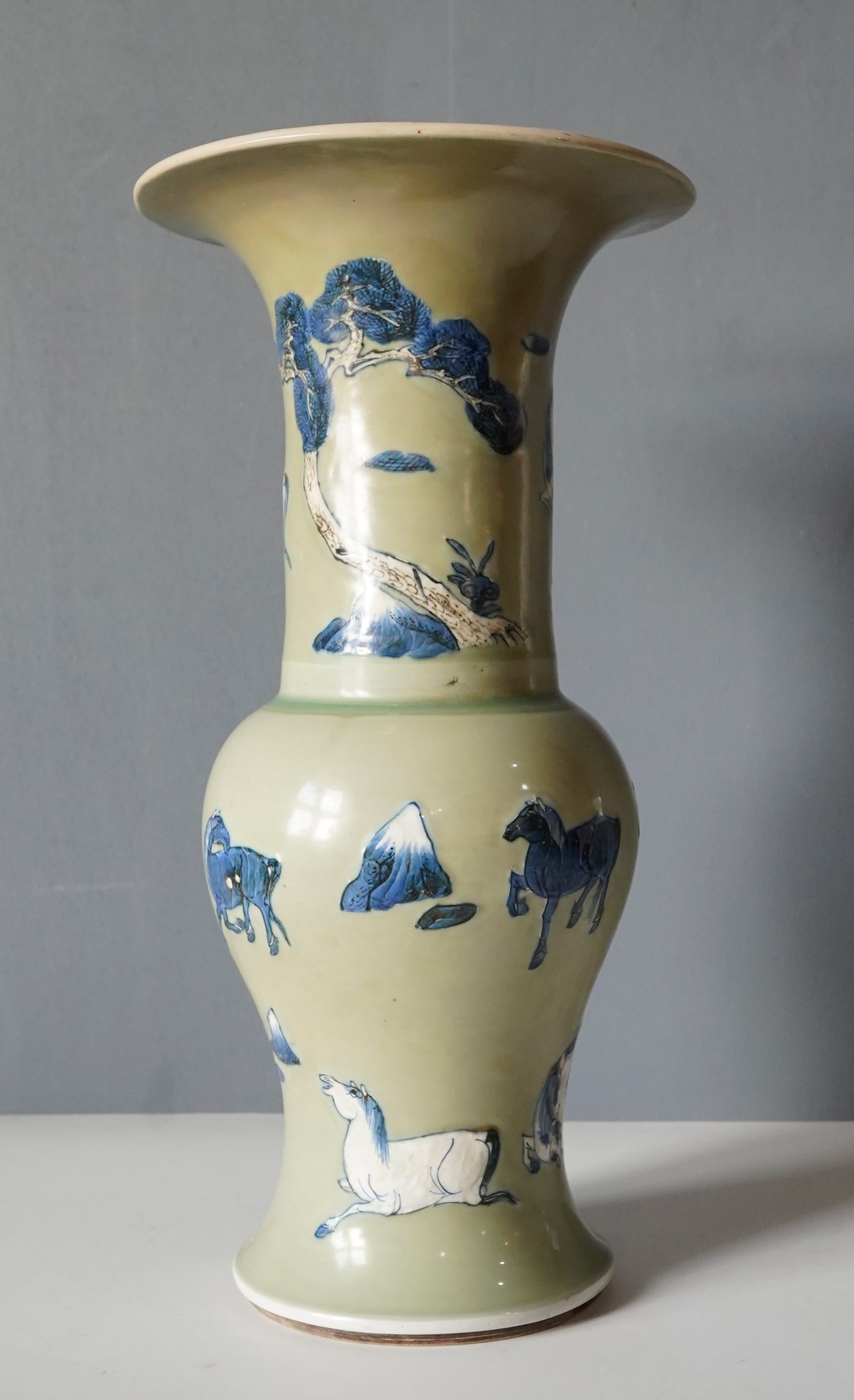
Kangxi Yen-Yen Vase — The Eight Horses of Muwang
Kangxi period, 1644–1722. 44.5 cm high, rim 23 cm wide.
This splendid large vase is a form known as a Yen-Yen (鳳尾瓶), also called a Phoenix-tail or fengwei vase — a type particularly associated with the Kangxi period. The decoration is remarkable: a celadon glaze decorated with opaque white enamel features painted thickly onto the glaze surface, combined with cobalt blue and the rarely seen copper red, an underglaze colour capable of withstanding high temperatures.


The Legend of the Eight Horses of Muwang
The Eight Horses of Muwang refers to a famous legend associated with King Mu of Zhou (Muwang), a ruler of the Zhou Dynasty (976–922 BCE). According to mythology, King Mu possessed eight extraordinary horses — each with unique supernatural abilities — which allowed him to travel great distances on his legendary journey to meet the Queen Mother of the West (Xiwangmu), a powerful goddess residing in the Kunlun Mountains.
Each horse was said to possess traits such as flying across vast distances, running without touching the ground, moving as fast as the wind, and glowing in the dark. This legend was recorded in ancient texts including the Liezi and Shiji, blending history with myth.


Provenance: UK collection, acquired 1960s; private collection, Australia. The owner purchased this in the UK in the 1960s, shortly before migrating to Australia.