The Cannon Family Silver – patrons of William + Mary Chawner, London Silversmiths.
Two Sterling Silver mustard spoons made several decades apart tell an interesting story.
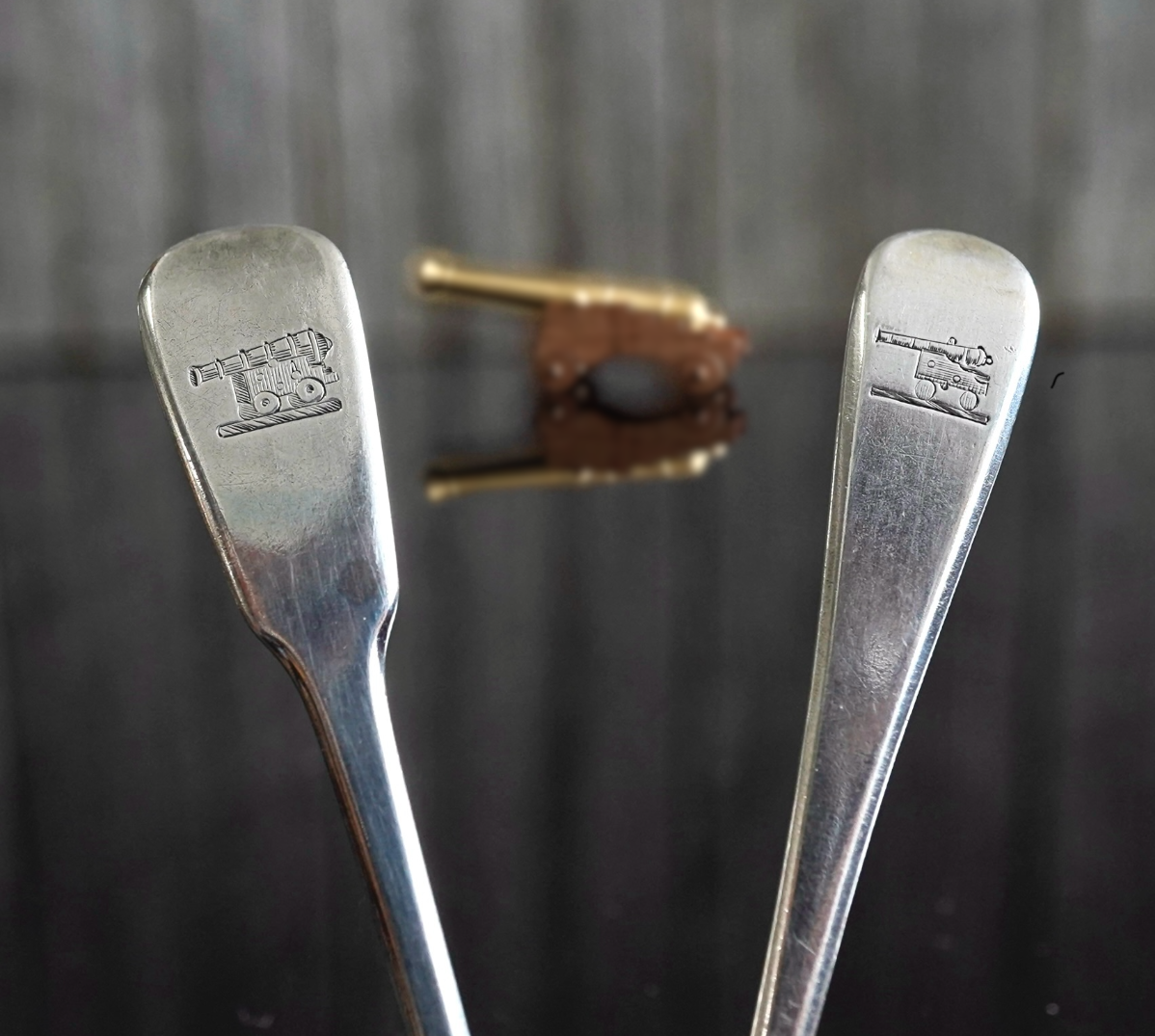
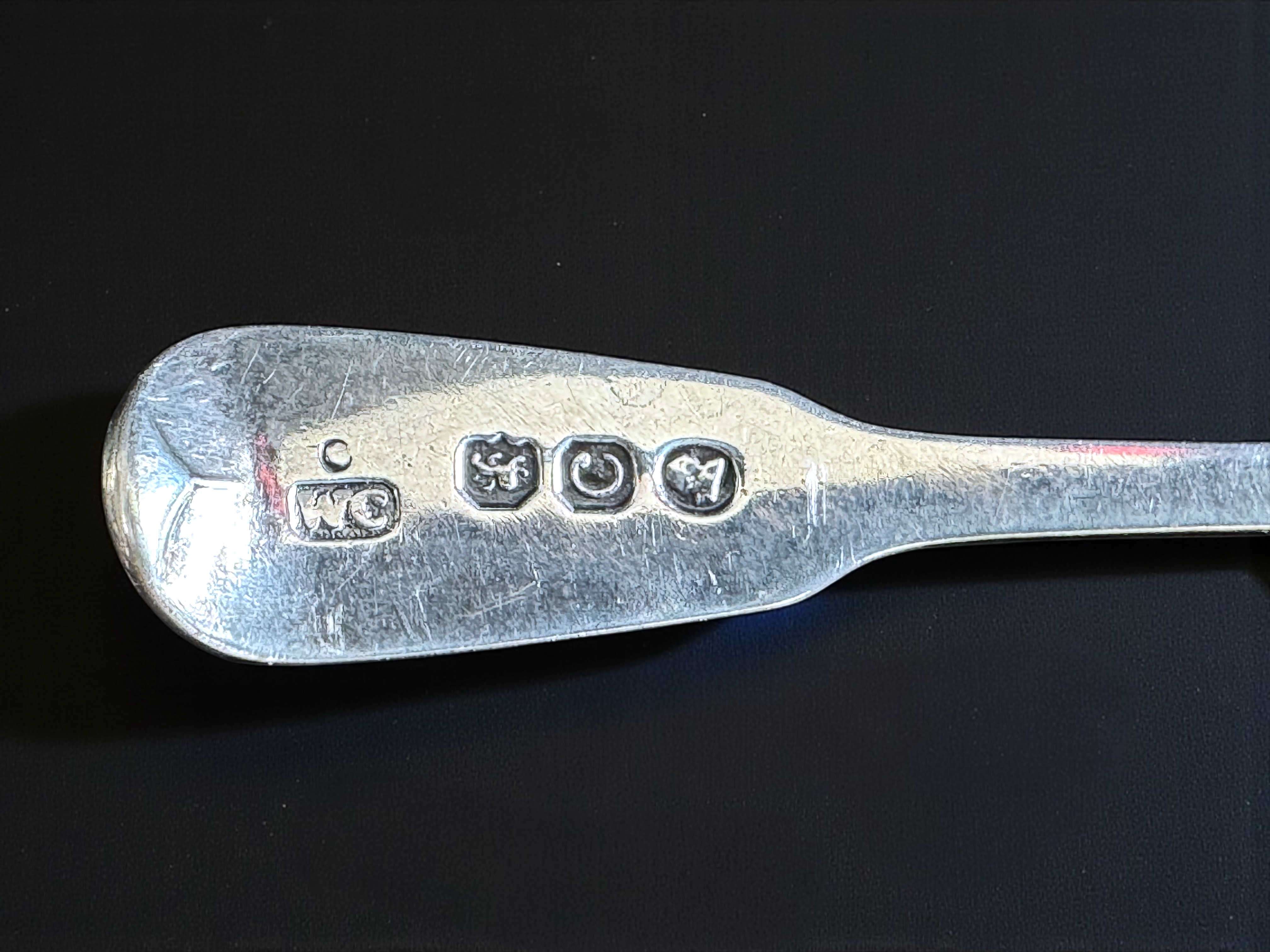
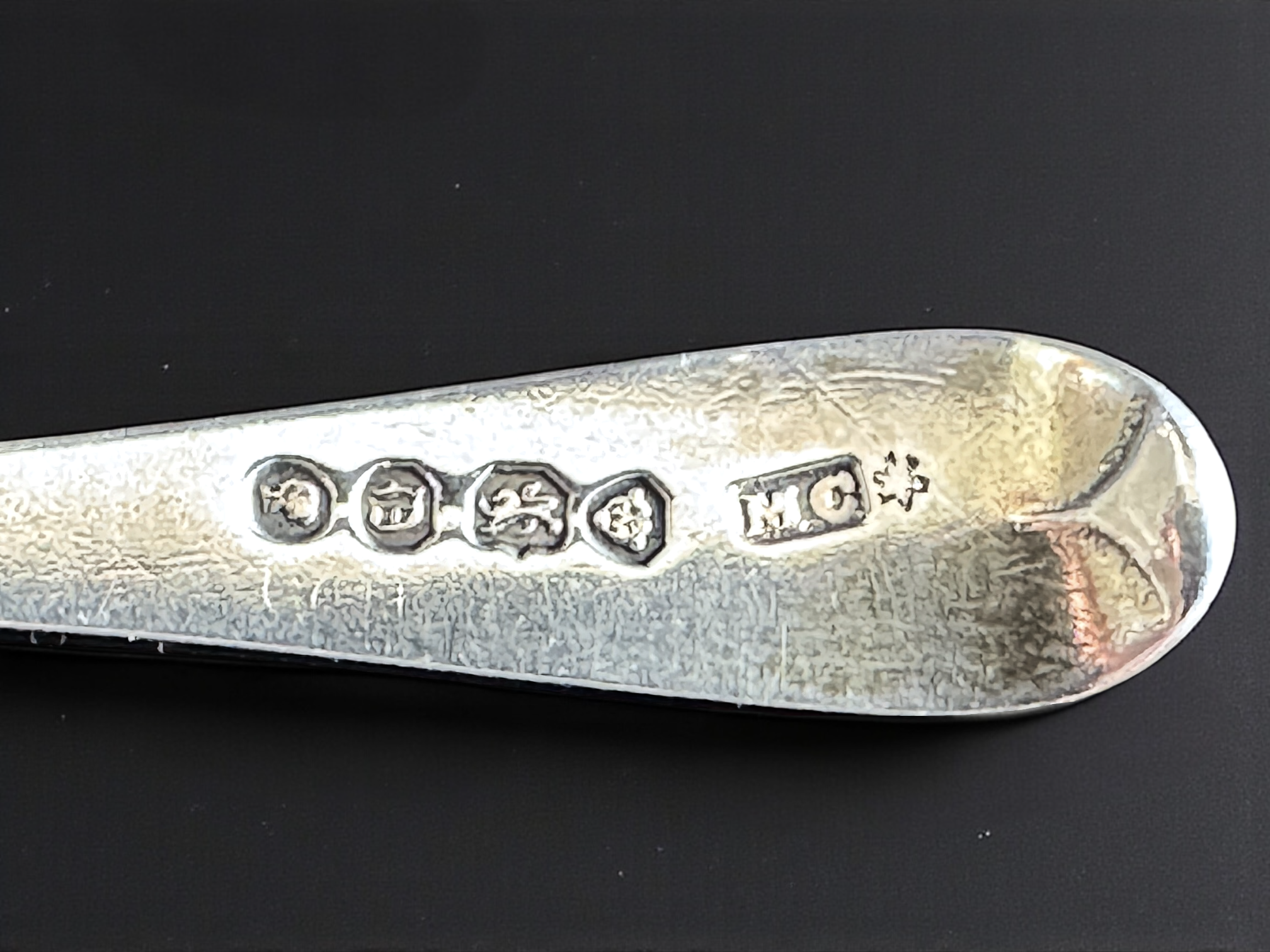
The marks “WC” (London 1818) and “MC” (London 1839) tell of continuity — three decades of a single London family commissioning silver from two generations of England’s foremost flatware makers, the Chawners of Hosier Lane.
The Chawner Silversmiths
William Chawner II entered his mark “WC” in 1815, continuing a family workshop in Hosier Lane that had been producing the finest flatware in England since the 18th century. His pieces — elegant spoons, forks, and serving implements in the classical Regency style — were admired for their precision, weight, and finish, and were supplied to London’s leading retailers and directly to aristocratic households. Chawner’s name became synonymous with English silver flatware at its best.
When William died, his widow Mary Chawner took over the workshop and continued to enter her own mark “MC” until she remarried in 1839 — at which point the business passed to her new husband, George William Adams. Mary’s period of independent production, roughly 1834–1839, is relatively short, which makes pieces bearing her mark genuinely collectible in their own right. The Cannon service bridges both periods, with pieces from William’s workshop in 1818 and Mary’s in 1839 — a span of over two decades of patronage.
The Cannon Family
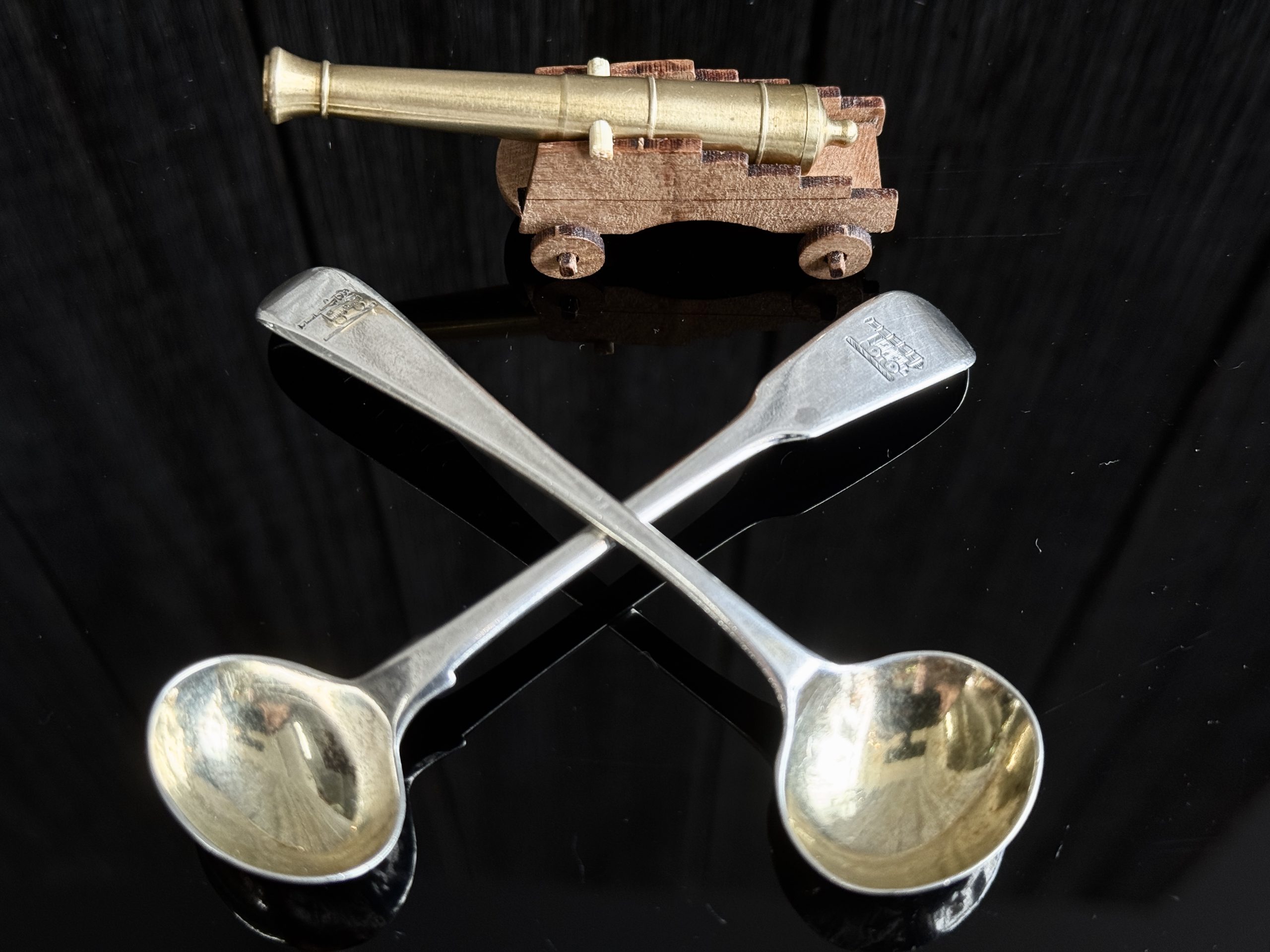
The Cannon family crest — a cannon, naturally, as an armorial pun on the name — appears consistently across the service, suggesting the pieces were commissioned as part of a unified household silver scheme rather than assembled piecemeal. Captain Cannon was established in the City of London by 1818, his name appearing in the directories of the Honourable Artillery Company — among the oldest and most distinguished regiments in the British Army, drawing many of its officers from London’s merchant and banking circles.
His household silver — the earliest pieces bearing his crest dating from 1818 — would have formed part of his marriage plate, possibly commemorating his union with Mary Ann (née Wilson), daughter of a London wine importer. During the Napoleonic aftermath, Cannon’s company participated in ceremonial duties and gunnery training at the Tower of London. By the 1830s he had retired to Blackheath, Kent, then a genteel suburb of London, where he remained active in the Honourable Artillery Company’s veterans’ corps and local charitable works. Captain Cannon died about 1845, with his estate probated in London.
The silver passed through the family and eventually made its way to Australia — one of those quiet migrations of English household property that happened throughout the 19th and early 20th centuries as families emigrated or sent younger sons to the colonies. It arrived at Moorabool from a local collection.

A service of this provenance — documented makers, armorial engraving, consecutive family patronage spanning two Chawner generations — is exactly the kind of material that serious silver collectors seek and rarely find intact.
View these lots on Invaluable →